
Generative Audit Compliance for Elm AI
Duration
5 Months
Role
Product Designer
Team
3 Engineers
1 Designer
Tools
Figma
Context ———————
What is ELM AI?
ELM AI is an enterprise SaaS platform that helps small and medium-sized businesses manage ESG compliance. It uses AI to analyze audit documents, detect non-compliance risks, and generate corrective action plans — reducing manual work and improving operational efficiency.
The Problem ———————
SMBs spend 20–30 hours weekly on manual ESG compliance tasks, causing 40% reporting delays and 15–20% error rates.
While SMBs collect valuable audit data, it’s often fragmented across reports and lacks clear prioritization and certain non-compliance items can get missed. This creates key challenges for SMBs as compliance management has many:
Problem

Visibility and Oversight Issues

Time Consuming and Causing Delays

Fragmented and Lack of Tracking
User Research ———————
How might we help SMBs centralize non‑compliance data, understand supplier risk, and streamline corrective actions so they can manage ESG compliance more efficiently?
SMBs managing ESG compliance faced fragmented data, limited supplier risk visibility, and manual corrective actions that slowed decisions. This created an opportunity to design a centralized dashboard surfacing non-compliance items and supplier risk insights to help teams act faster and with more confidence. To guide this, I gathered insights from SMB users about their workflows, audit challenges, and key needs. Here’s what they shared:
Problem

“I have multiple audits coming in from different suppliers, and it’s hard to keep track of all the non-compliance items without digging through several PDFs.”
“I want to see which suppliers pose the most risk at a glance, instead of piecing together their history from scattered reports.”

Research ———————
How are SMBs currently managing their compliance tasks?
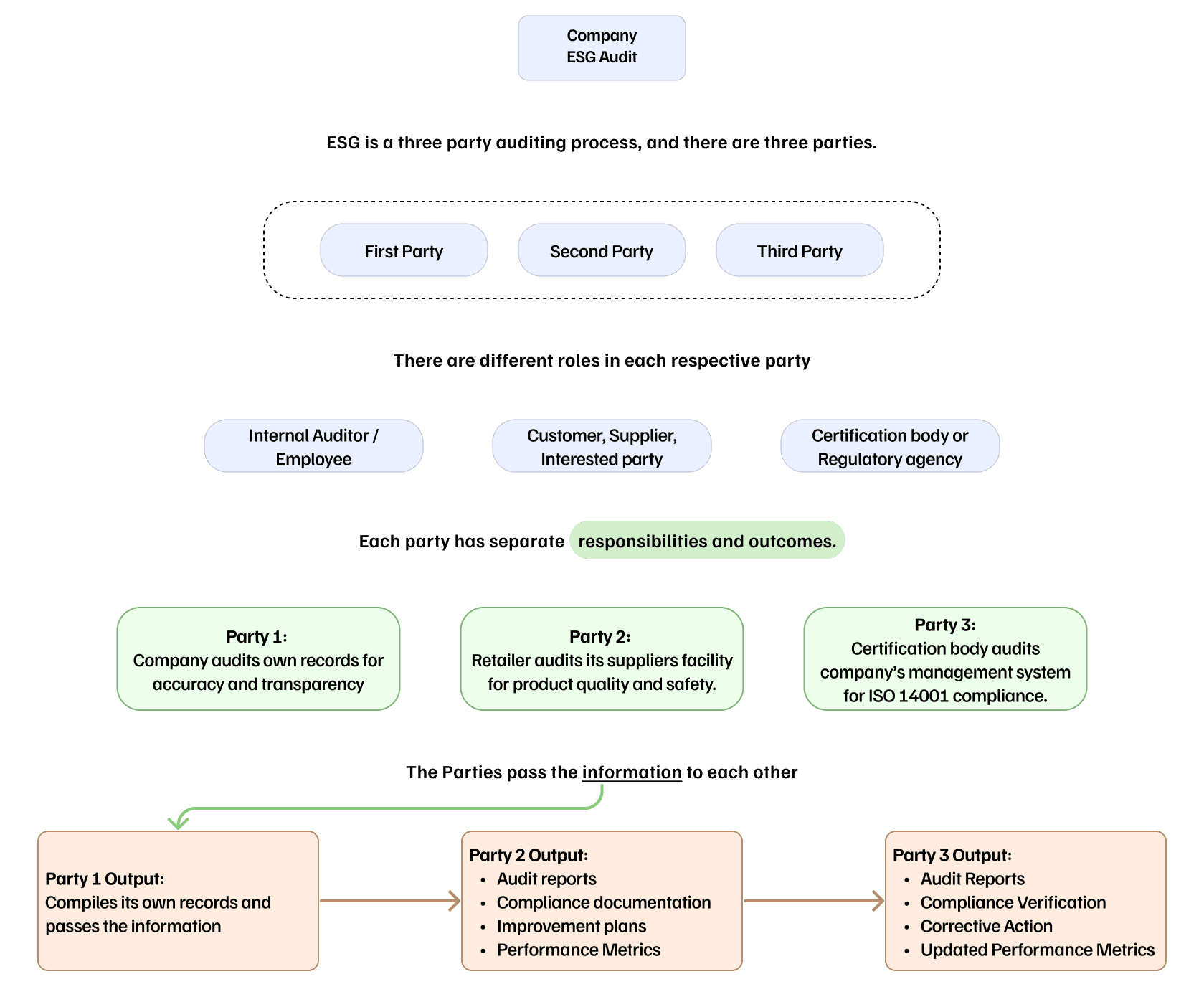
To better understand how SMBs manage ESG due‑diligence tasks, we collected user insights and translated them into a detailed journey map of the auditing company’s process. This allowed us to visualize each step, pinpoint where errors occur, and identify opportunities for design intervention early in the process.
Current Process
Ideation ———————
Upon compiling user research insights we decided to jot ideas down
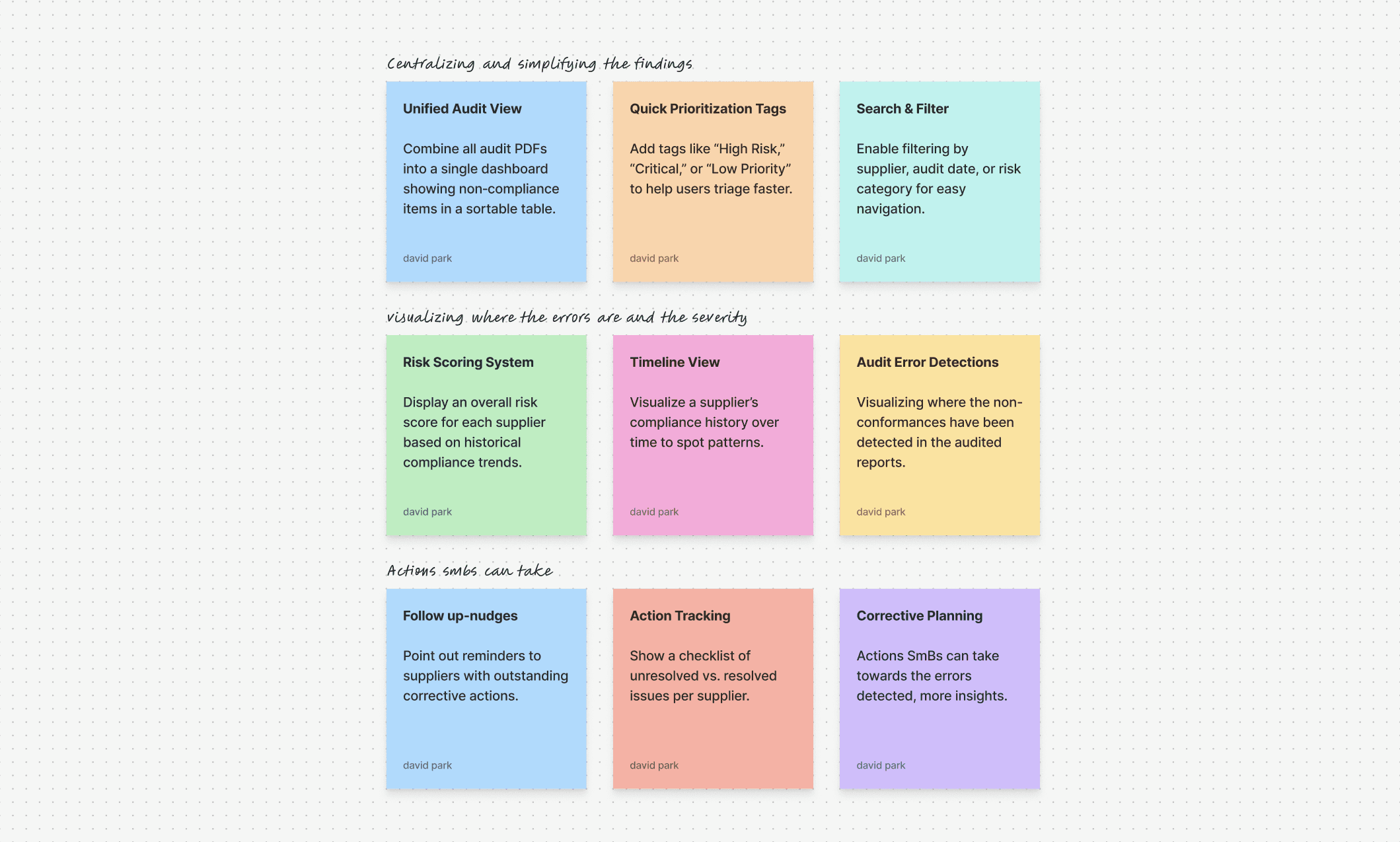
I led a brainstorming session with my team of 3 engineers and product manager to ideate possible features, making sure to reference our essential HMW statement. Below is an overview of our main brainstorming results.
Ideation
Ideation ———————
So many ideas, so how can we prioritize what's best for our users?
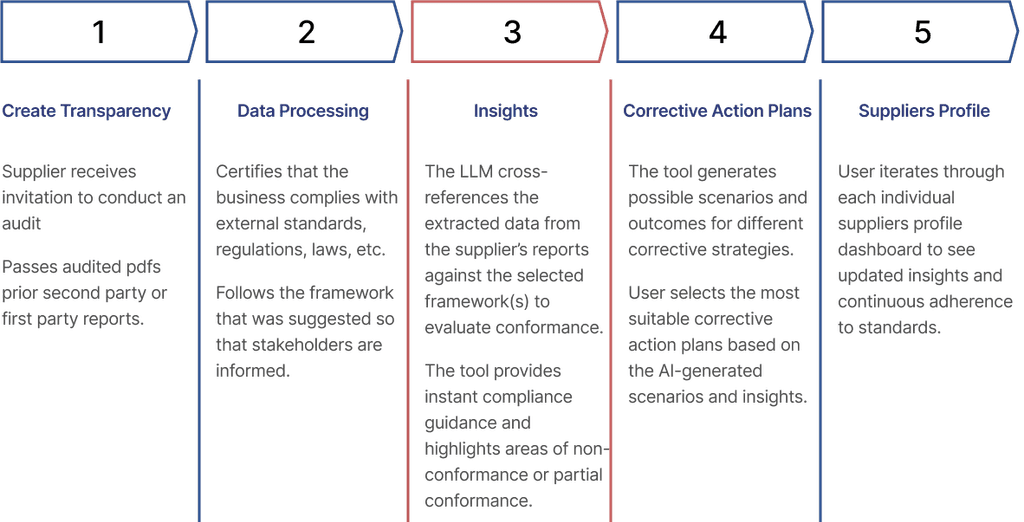
While engineers were developing LLM models around ESG standards and regulations, our focus was to create a user flow that aligns with existing capabilities and address the core pain points uncovered in research — fragmented non‑compliance data, unclear supplier risk context, and manual corrective actions.
Problem
Ideation ———————
We landed on building an AI-driven solution that could point out issues within audits with summarized action plans
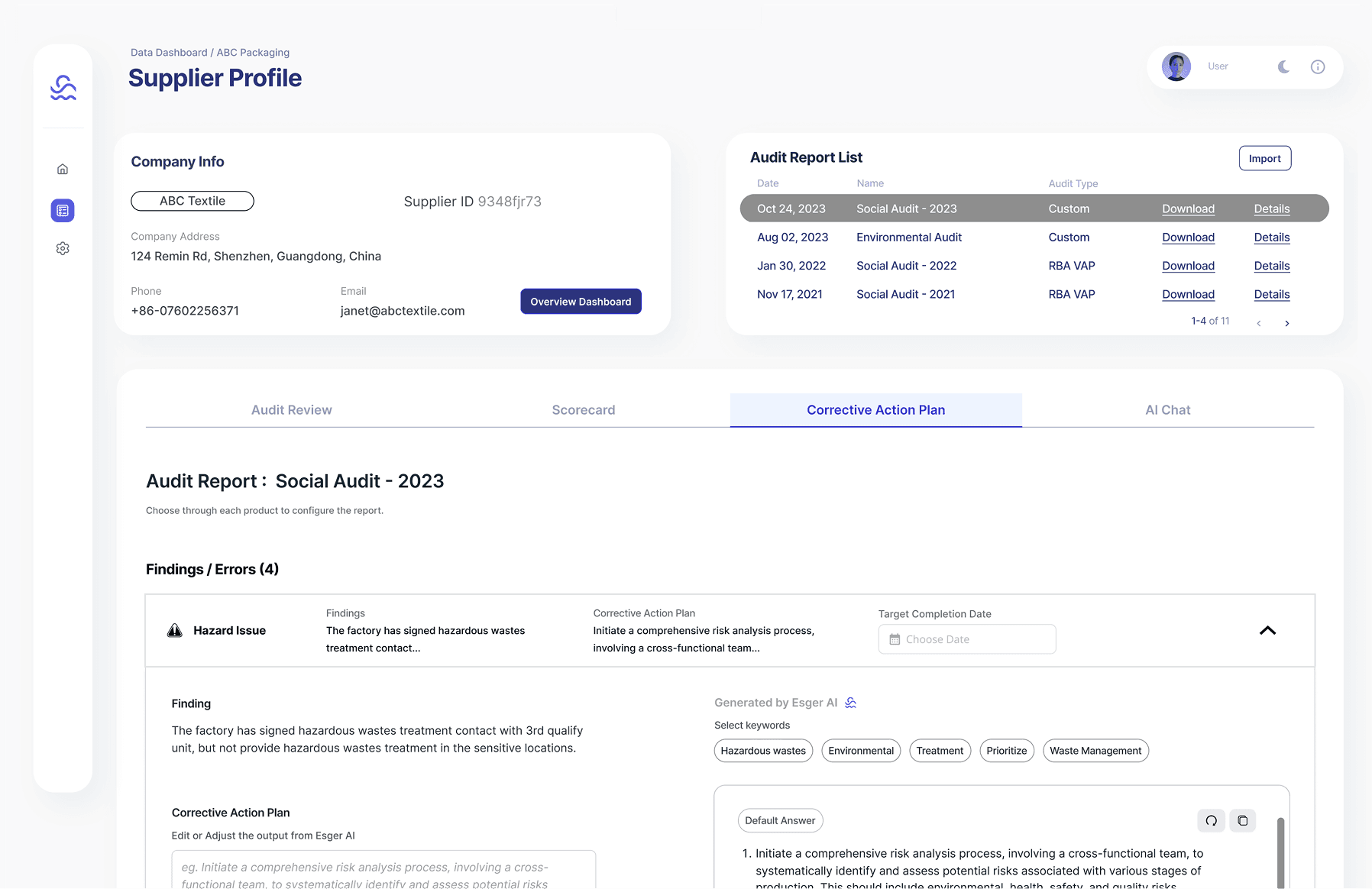
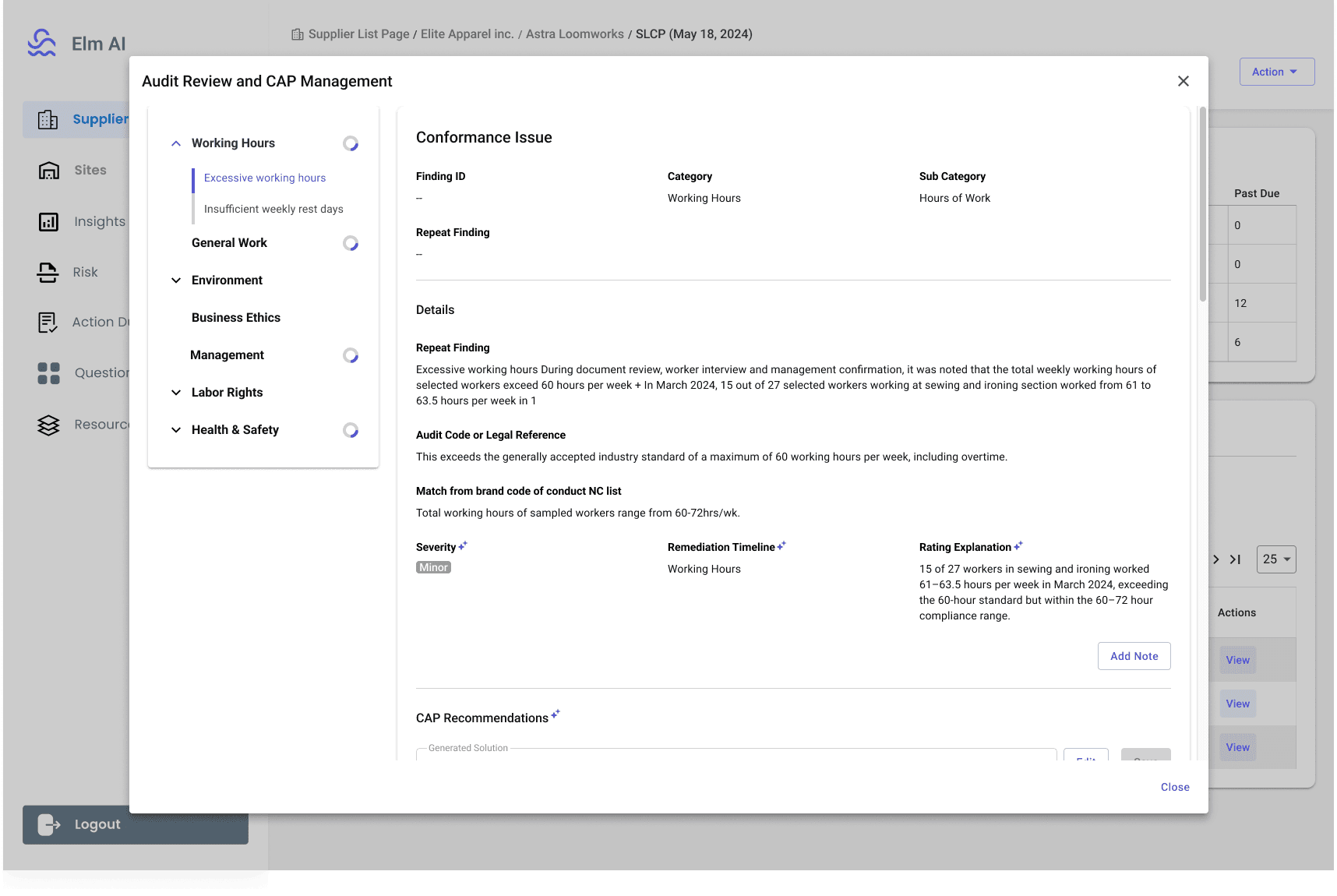
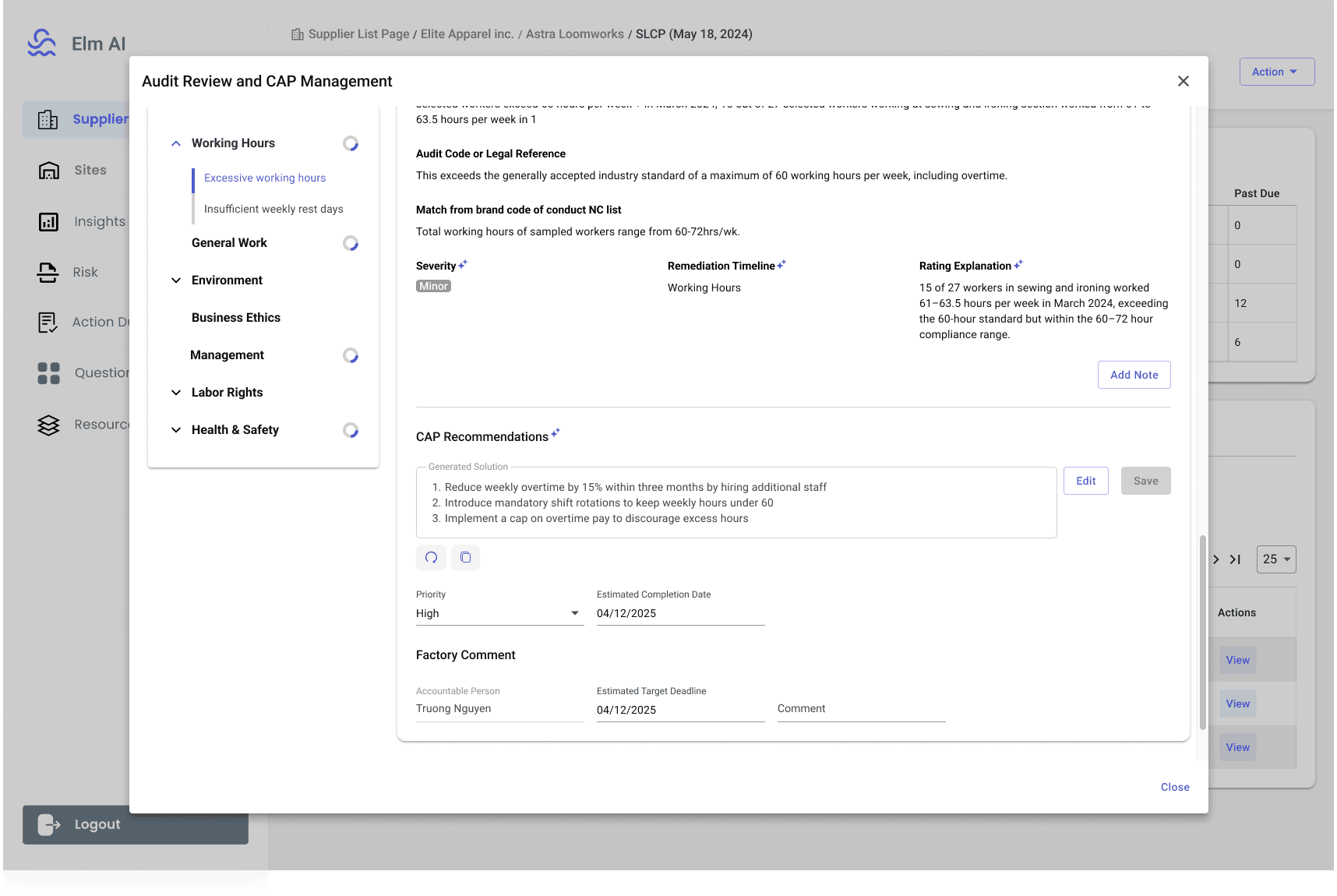
To improve how suppliers respond to audit findings, we designed the Corrective Action Plan (CAP)—a feature that helps users identify, understand, and resolve non-conformances with greater clarity and efficiency. CAP surfaces outstanding issues flagged during audits while reinforcing supplier credibility through transparent action tracking. More importantly, it directly addresses key pain points we uncovered through user research: lack of visibility, time-consuming resolution processes, and decision-making delays—challenges especially common among small to mid-sized suppliers.
Initial Explorations
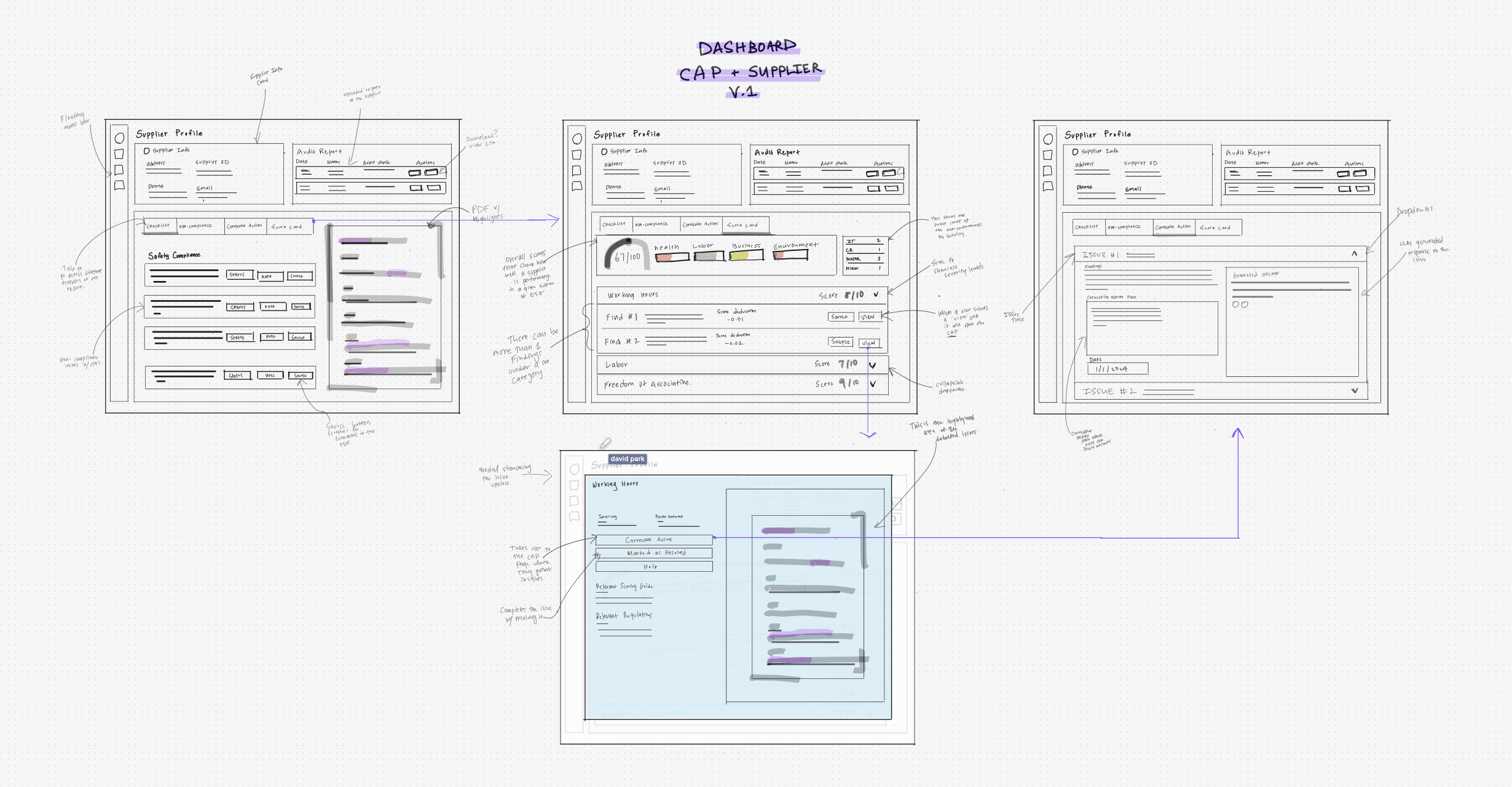
During this process, I worked closely with developers to understand the constraints of our LLM models, which helped shape a realistic user flow for how SMBs would engage with the Corrective Action Plan (CAP) feature. With these insights, I moved into early low-fidelity sketching to map out key interaction points across the product. To streamline navigation across multiple entry points, I designed a centralized dashboard using tab-based navigation to house all product features.
Sketches
Iteration and Early Testing ———————
Exploring report roll-ups to simplify viewing ESG categories and detected compliance issues
Users could upload or select past reports, then access insights and corrective actions with minimal friction. The goal was to simplify access to non-compliance findings while emphasizing the next steps users could take.
Low Fidelity - Home Page
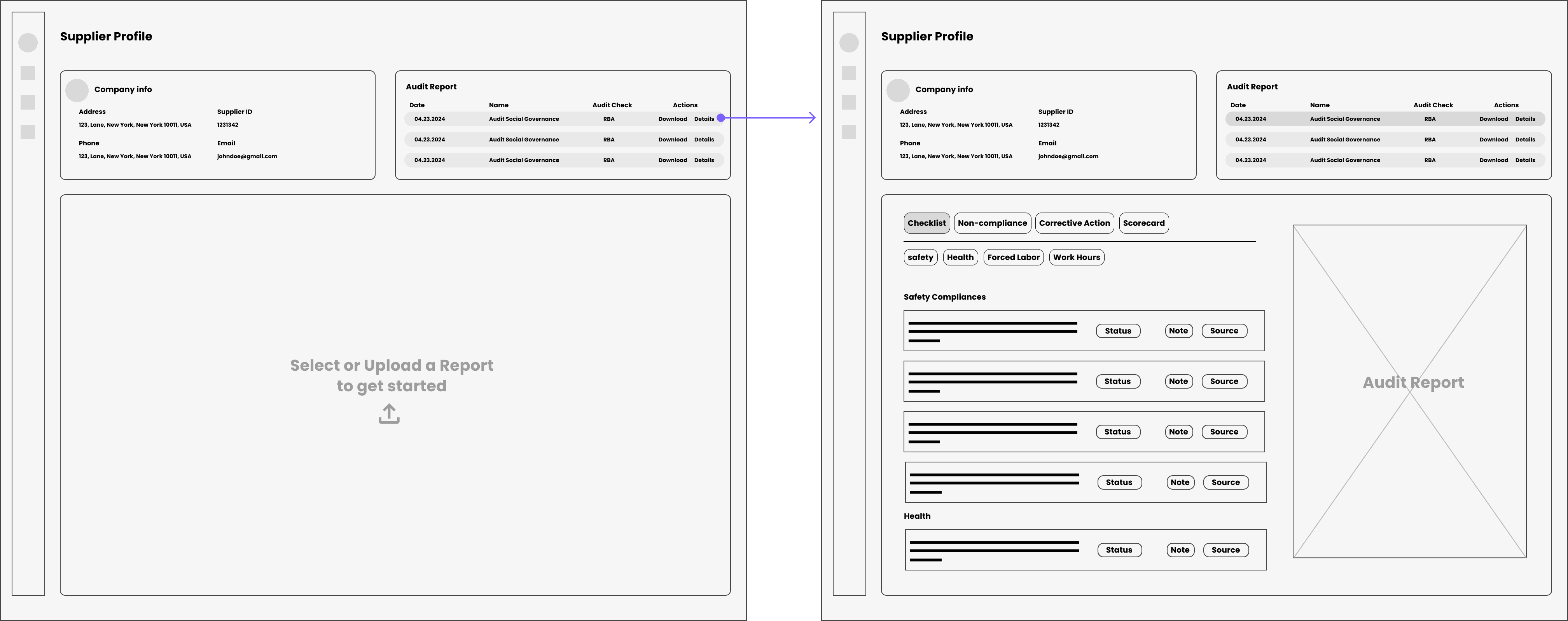
quick report selection to begin viewing
Tab navigation feels non-intuitive given that the pill shaped categories below it, operate similarly
Navigating between suppliers feels confusing
Visually dense w/ multiple paragraphs to read
the report pdf doesn't add value and instead feels cluttered with the rest of the elements.
Iteration and Early Testing ———————
AI Generated responses to help address solutions for issues
For each issue flagged in the audit, an AI-generated corrective action is surfaced, giving users a starting point to customize and complete their response efficiently.
Low Fidelity - CAP
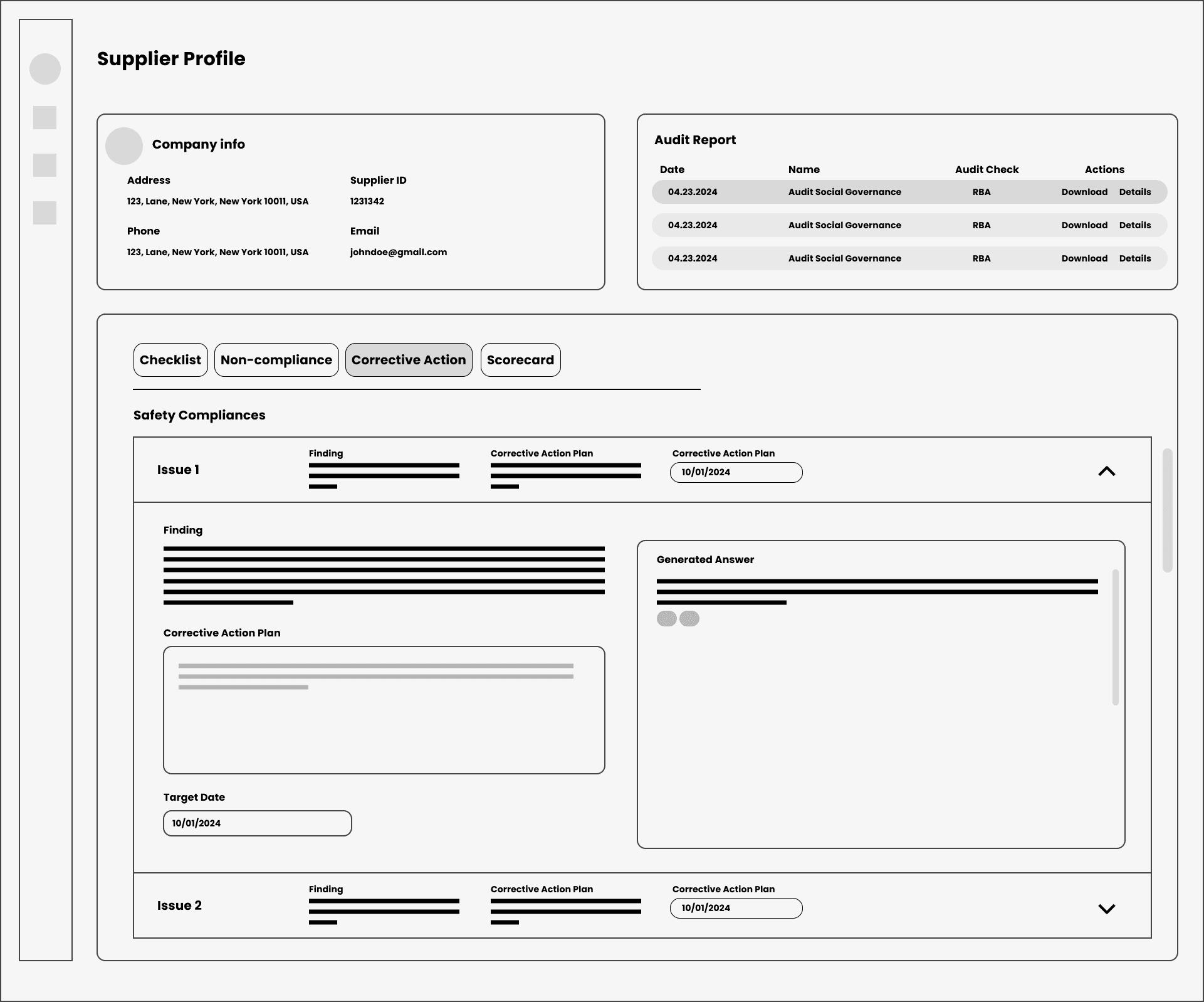
Supports quick drafting of next steps using AI
not intuitive for users to click into the CAP input and expect it to be saved
Lacking immediate, high visibility CTAs
redundant issue list items make it hard to differentiate which issue is a priority
Iteration and Early Testing ———————
Viewing supplier information and detected compliances
This page gives users a high-level view of supplier performance over time, making it easy to spot recurring critical compliance issues across multiple reports.
Low Fidelity - Score Card
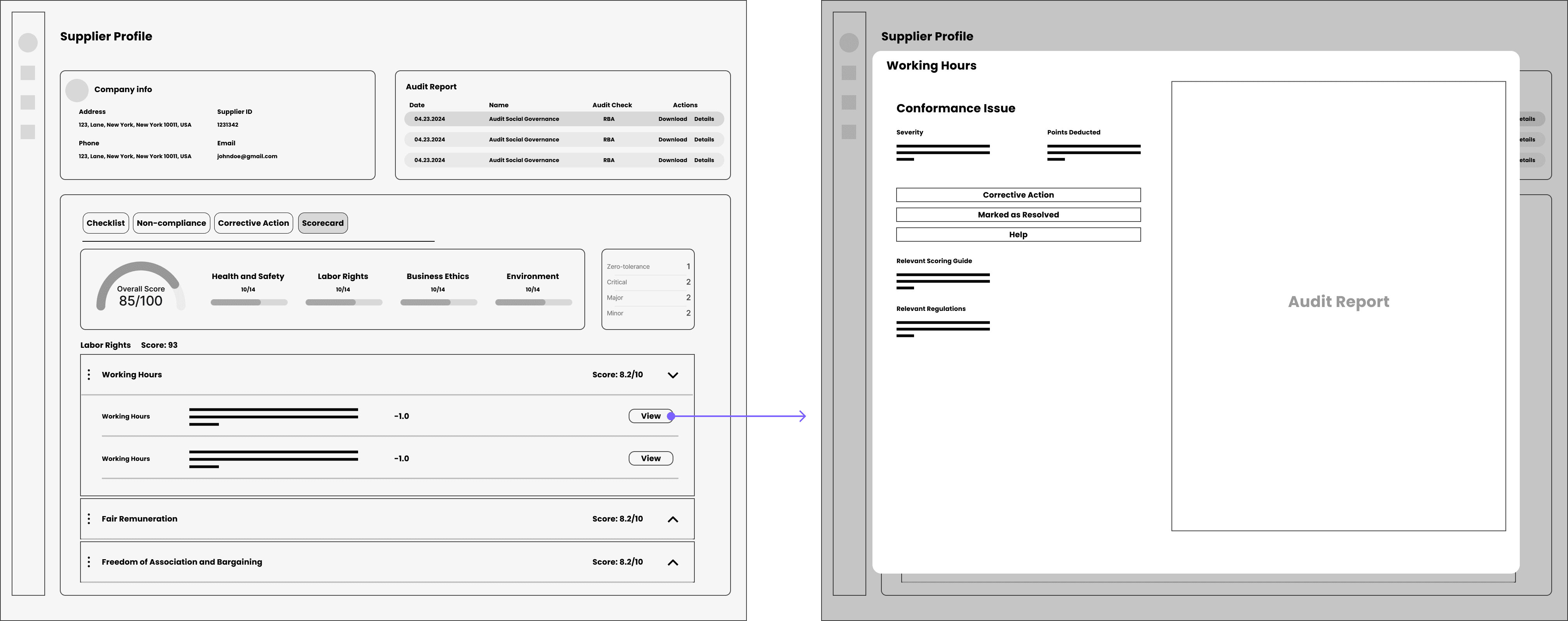
easy to asses how well performing a supplier is doing
performance metrics seem less important given that they change annually or quarterly.
offering little new information beyond what’s already shown in checklist tab
repetitive modal popups increases distraction
Results ———————
User testing proved we needed to pivot
After conducting several usability tests, I found that while the tab navigation between each feature seemed purposeful to users, they lacked enough distinction from each other, and users felt existing parts of the screens like the compliance issue items to be redundant. This made it difficult for users to know where to navigate within a page and what's more important for their tasks. Based on this feedback, I chose to pivot the design a different direction.
New Design ———————
A unified dashboard that keeps the audit features all in one tab
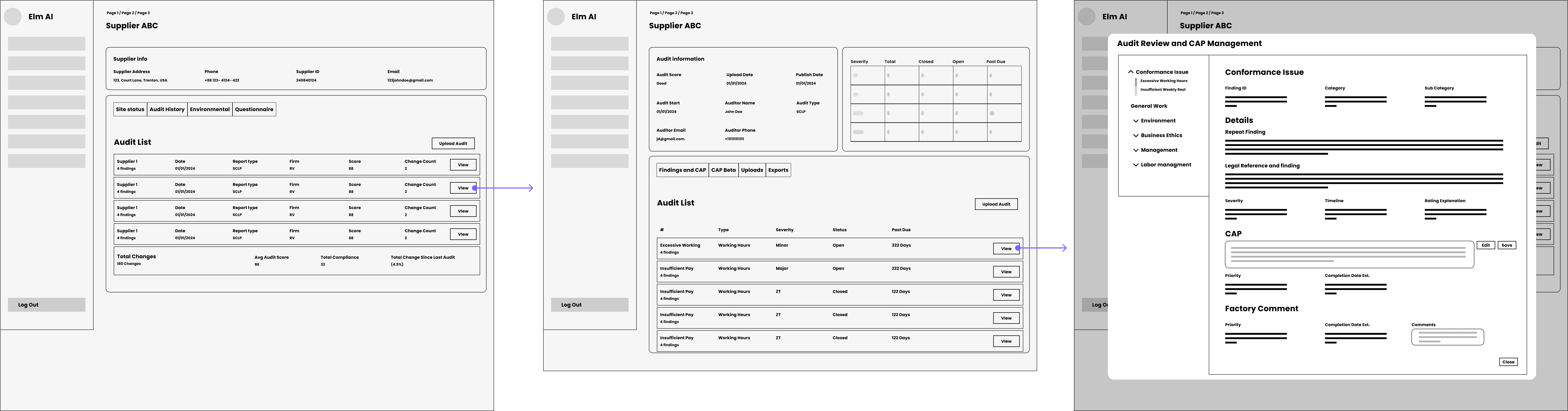
After aligning with engineering, we restructured the system architecture to clarify the purpose of each tab and reduce redundancy. We grouped all audit-related insights under a single Audit History tab to address user feedback about repeated elements. We also moved the report overview to the forefront, helping users quickly understand which report they’re viewing while creating a more consistent experience—allowing them to drill into conformance items via a modal rather than navigating away.
Pivot Design
Final Delivery ———————
Final Designs
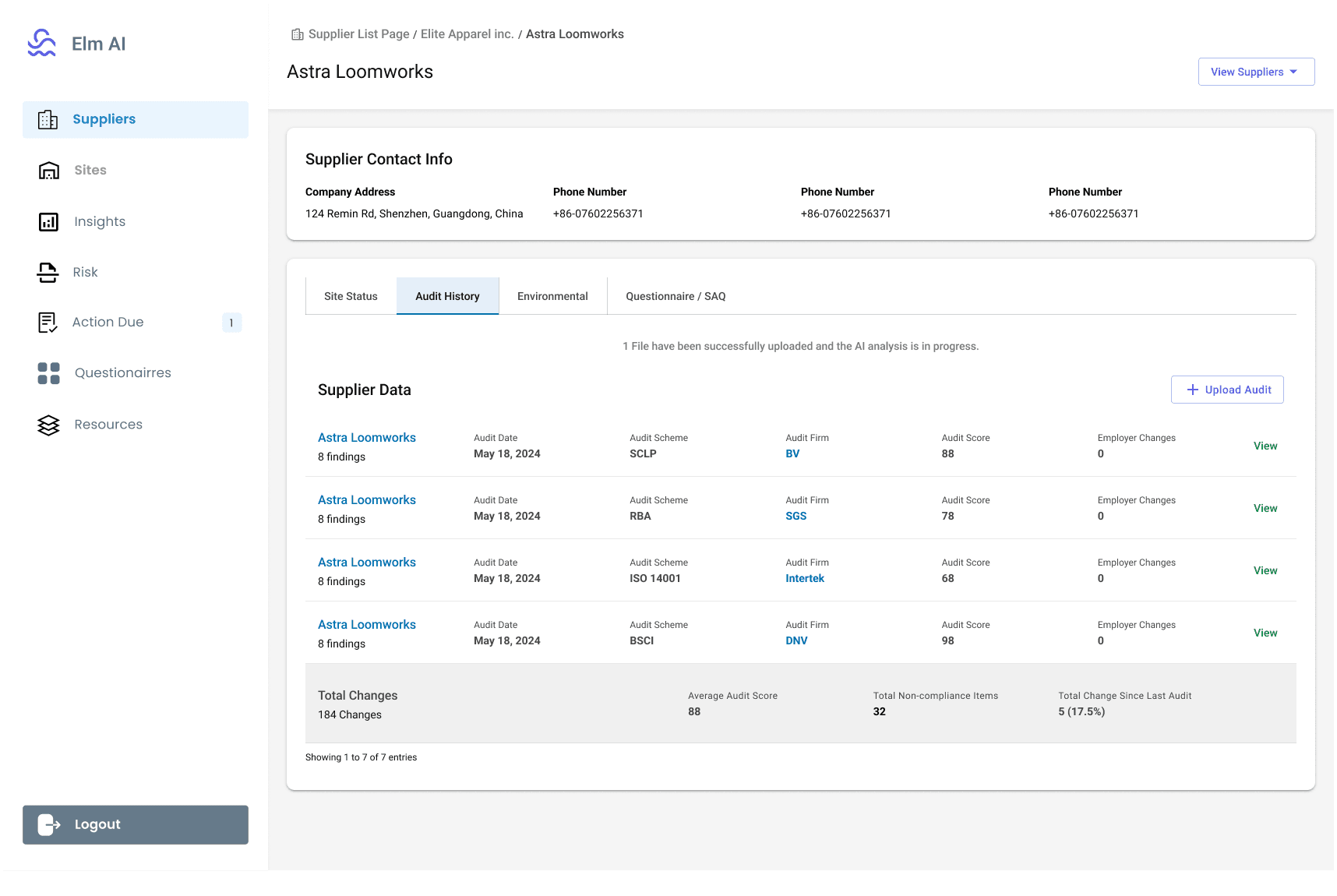
Home / Supplier
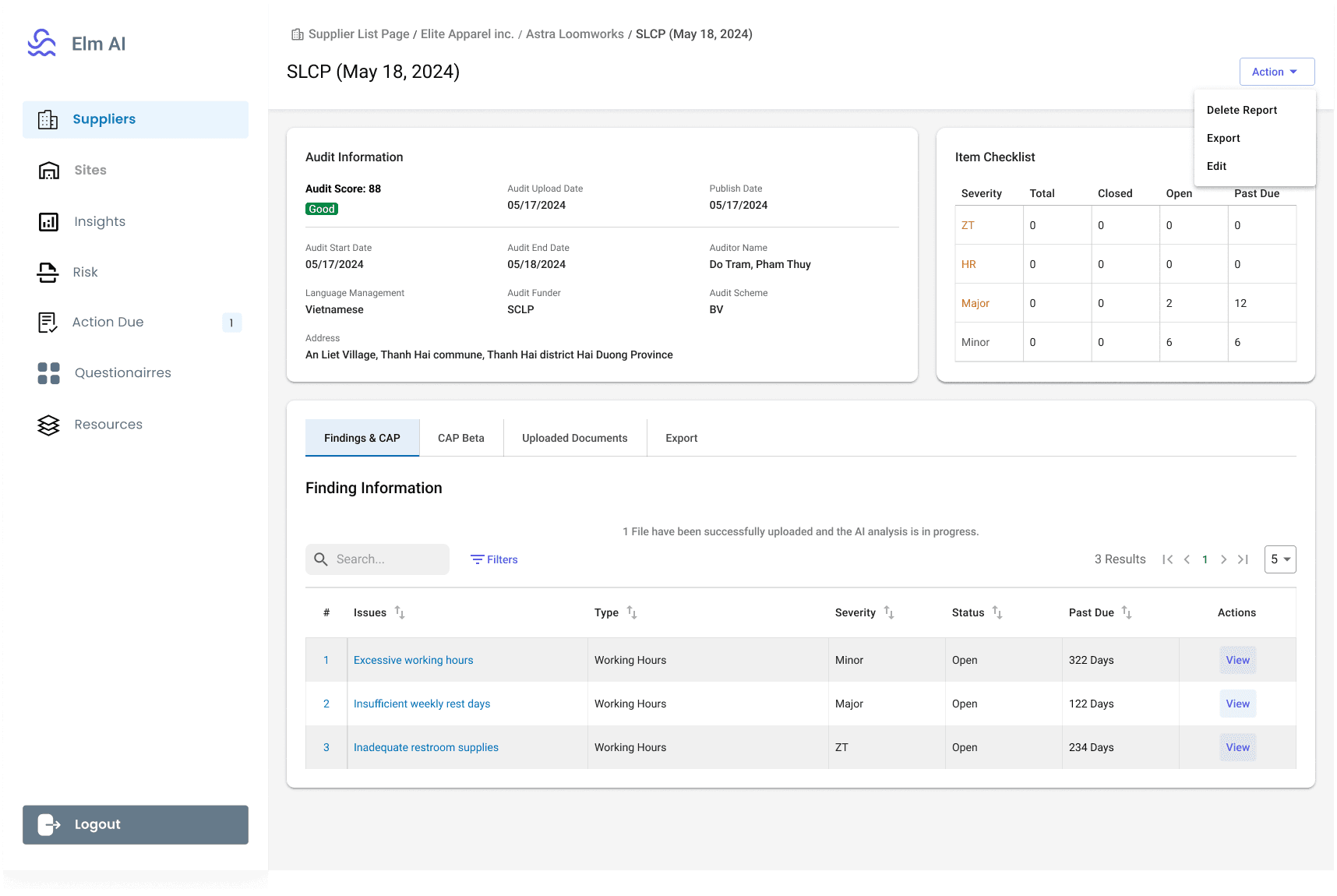
Home / Supplier / Report
Home / Supplier / Report / CAP
Next Steps
Continued Usability Testing
Run continued usability testing on revised report entry flow to evaluate whether the new navigation and report selection experience is clear and reduces redundancy for day to day tasks. Furthermore, I'd like to test if this dashboard is scalable for future features to live alongside what we have now.
Enhanced CAP Resolution
Explore opportunities to expand the Corrective Action Plan (CAP) feature by leveraging AI to deliver more tailored and strategic recommendations. This includes auto-prioritizing critical non-compliances, generating more robust action plans for recurring issues, and compiling comprehensive, supplier-facing plans that encourage long-term remediation and accountability.
In the early stages of ELM AI, we faced the familiar challenges of a lean startup—tight timelines, limited budget, and the pressure to validate quickly. Rather than investing in a mature design system, we focused on delivering core value through our LLM capabilities. This meant rapid prototyping and constant iteration based on direct conversations with SMBs. Their feedback shaped our priorities and helped us build a product that addressed real-world ESG compliance challenges from day one.